
Home Remodeling
How to Get the Most Out of Your Remodeling Budget in Charlotte, NC
A remodeling budget does not mean settling for less. The strongest results usually come from clear priorities, smart tradeoffs, and a detailed estimate before any work begins.
By Mary Bolous, Project Manager · Published April 1, 2025 · Last updated October 15, 2026
NC Licensed General Contractor #109290 · Fully Insured · 6-Month Workmanship Warranty · ★ 5.0 on Google (64+ reviews)
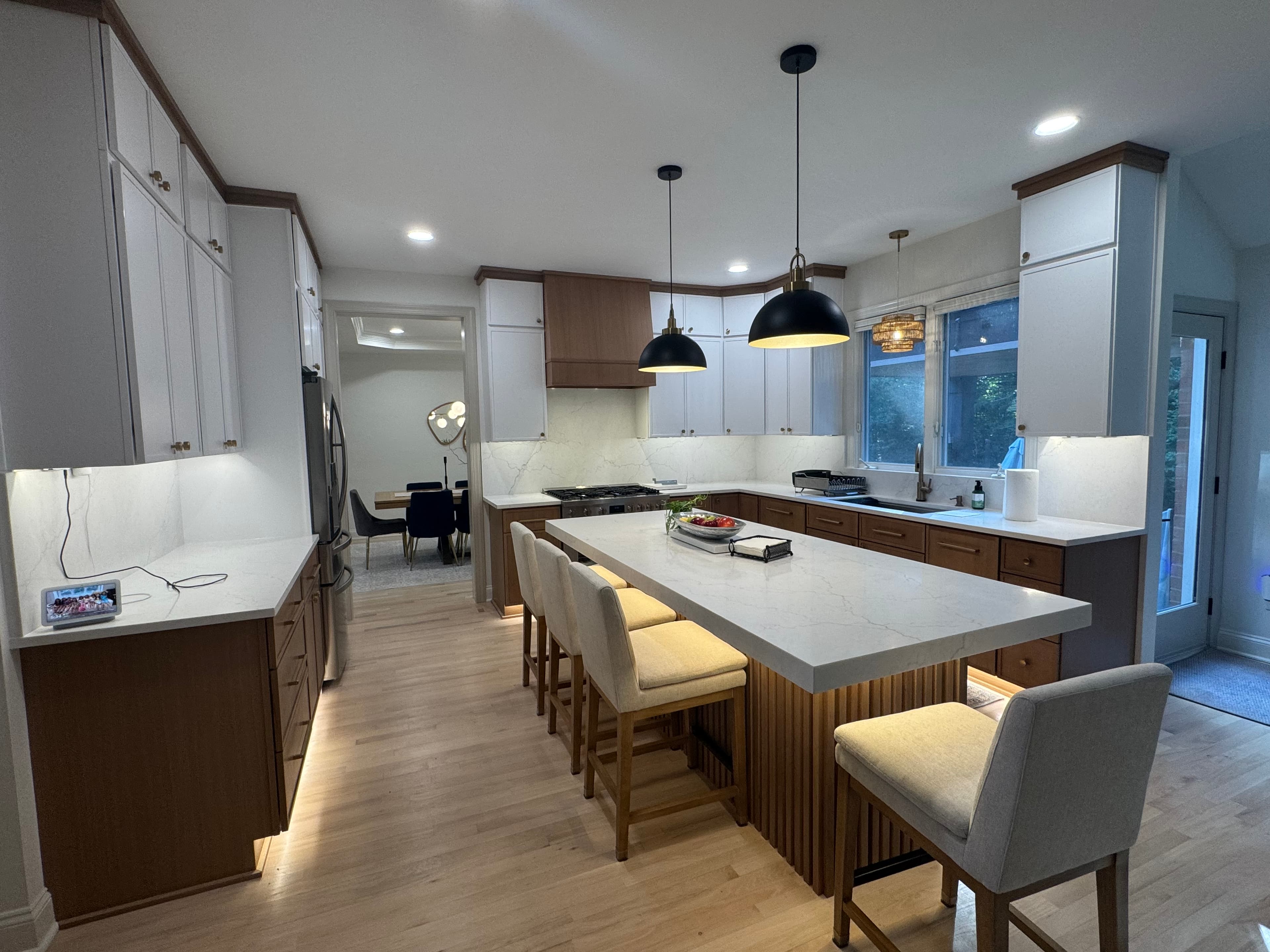
Every homeowner remodeling in Charlotte has a budget. The goal is not to spend as little as possible — it is to spend wisely, so the money you invest delivers the maximum impact in your home.
The most common remodeling regret we hear is not "I spent too much." It is "I spent money in the wrong places." A homeowner who put $8,000 into high-end appliances but kept their 20-year-old cabinets. A bathroom remodel where the budget ran out before the tile was finished. A flooring project that skipped proper subfloor prep and needed to be redone within two years.
Smart budgeting is not about cutting corners. It is about making deliberate decisions — knowing where quality matters most, where you can save without sacrificing results, and how to plan so nothing catches you off guard.
Here is how Charlotte homeowners who are happy with their remodels approach it.
Start With a Written Estimate — Before You Commit to Anything
A ballpark figure is a perfectly reasonable starting point. It's normal for a contractor to give you a rough range during your first conversation based on the scope you've described — that helps you quickly assess whether a project fits your budget. But a ballpark is not something to build a final decision around.
Never sign a contract based on a ballpark alone. Before you commit to anything, get a detailed written estimate from a licensed contractor — a line-by-line breakdown that specifies every task, every material, and every cost.
Here is why this matters: most budget overruns do not happen because a project was more expensive than expected. They happen because the original estimate was vague, and the gap between "approximately" and "actually" was filled with change orders.
A detailed estimate does three things for your budget:
It tells you exactly what you are getting. Every cabinet, every tile, every fixture is specified.
It tells you what is not included. Appliances, permit fees, design fees, material upgrades — these should all be explicitly addressed so nothing surprises you mid-project.
It gives you a real number to plan around — not a number you hope holds up.
Define Your Priorities Before You Get Estimates
Walk through your space and decide what matters most: the way it looks, the way it functions, or both equally. This helps your contractor build an estimate that prioritizes what matters most to you, and gives you a clear framework for decisions when trade-offs come up — because they always do.
Be Strategic About Where You Splurge and Where You Save
A well-budgeted remodel isn't about cutting costs everywhere equally. It's about spending more on the things you'll see, touch, and use every day, and finding smart savings on the things that matter less. Painting or refacing solid cabinets instead of replacing them can save thousands. Paint, reface or replace? →
Splurge on:
- Countertops — you touch them constantly and they define the look of a kitchen or bathroom
- Tile in the shower — a focal point that guests notice and that you live with every day
- Cabinet hardware — a relatively small cost with an outsized impact
- Fixtures — faucets and lighting are touched and seen daily; inexpensive ones show their age quickly
Save on:
- Cabinet boxes — semi-custom cabinets in a quality paint finish can look just as stunning as fully custom at a fraction of the price
- Appliances — mid-range appliances from reputable brands perform as well as luxury ones for most households
- Tile in lower-visibility areas — save the premium tile for the shower walls
- Decorative accessories — these can always be added over time
Build a Contingency Into Your Budget From Day One
Set aside 10 to 15% of your total budget as a contingency fund before you begin — not as an afterthought, from the very start.
Once walls come down, surprises happen: outdated plumbing, water damage hidden behind old tile, wiring that doesn't meet current standards. These discoveries are particularly common in older Charlotte homes in neighborhoods like Dilworth, Plaza Midwood, and Myers Park, and they're nobody's fault — just the reality of working with existing structures.
A contractor who tells you everything will go perfectly and there will be no surprises is either inexperienced or not being fully honest with you. A contractor who helps you plan for contingencies from day one is one who has actually done this enough times to know better.
Consider the Full Scope Before You Start
Sometimes the most budget-efficient approach is tackling multiple rooms at once rather than piecemeal over several years — shared labor, shared scheduling, and one detailed estimate covering everything. If you're weighing a full-scale remodel against doing one room now and another later, ask your contractor to walk through both scenarios with real numbers.
Get a Detailed Estimate Before You Sign Anything
It's completely normal for a contractor to give you a ballpark figure during an initial conversation. That's a reasonable starting point. But the critical part is this: that ballpark is the start of the conversation, not the basis for a contract. Get everything in writing, reviewed, and signed before any work — or any payment beyond a reasonable deposit — begins.
Explore our Financing options and read our bathroom cost guide as you plan the scope and budget for your project.
Ready to Build a Budget That Works for You?
Call us at (704) 931-3493 or request your free estimate online.
Remodel CLT serves Charlotte, Myers Park, Ballantyne, SouthPark, Huntersville, Matthews, Cornelius, and surrounding areas.
Licensed and insured. Serving the greater Charlotte, NC area since 2019.

About the author: Mary Bolous, Project Manager at Remodel CLT
Mary manages Remodel CLT projects from the first consultation to the final walkthrough. She is each client’s main point of contact and works with homeowners to turn their ideas into a finished plan for their kitchen, bathroom and whole-home remodels across Greater Charlotte. Her clients often mention her eye for design and her detailed, no-surprise estimates.
Get a Free EstimateReady to talk through your project?
If this article answered part of your question, the next step is a free conversation about your home, your goals, and what the right scope looks like for your Charlotte project.